
VIDEO
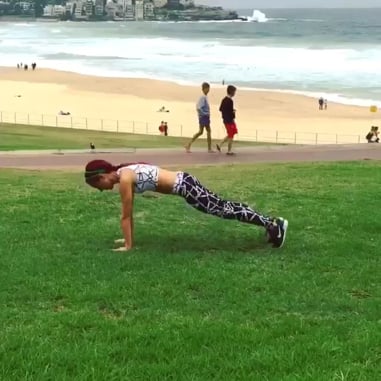
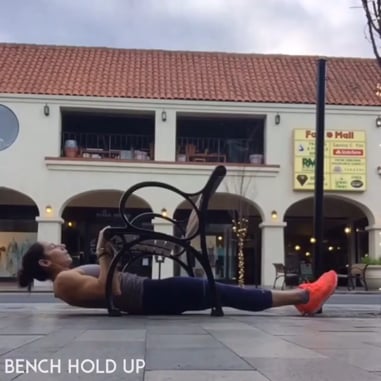
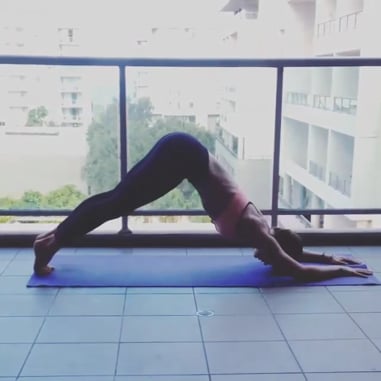
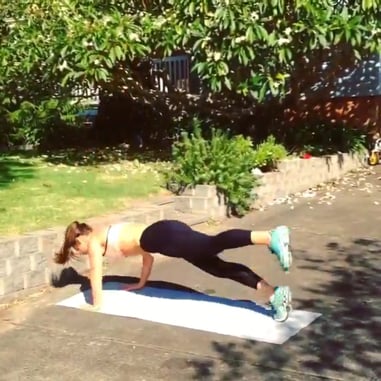
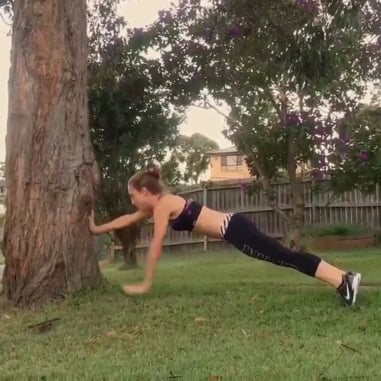
Plank with Opposite Arm and Leg Lift, Pushups, Elbow Plank Variation, Plank Forward High Knee Lifts
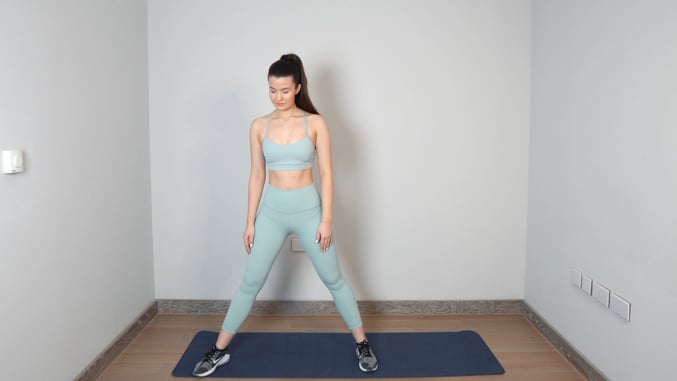
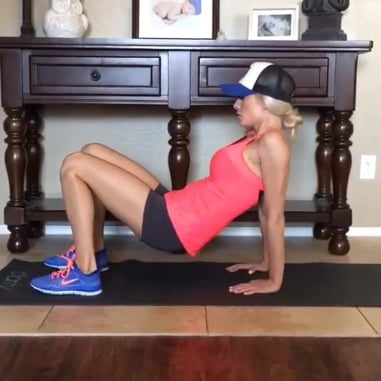
1. Start with a push-up position. Put your left hand to the left, but your right leg to the right and vice versa. 2. Do a push-up and being in this position put your left hand forward and right leg backward. Change the side. 3. Start with a push-up position and go to the plank position after it. In plank position touch the ground with your left and right hips. 4. Do a push-up and band your knees to reach your chest one by one.
save to ...
RECOMMENDED FOR YOU
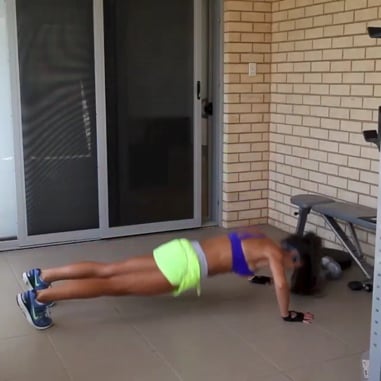
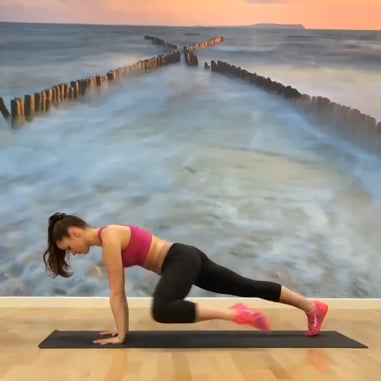
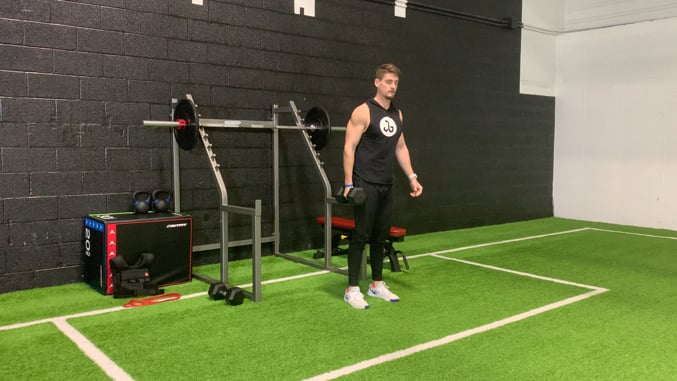
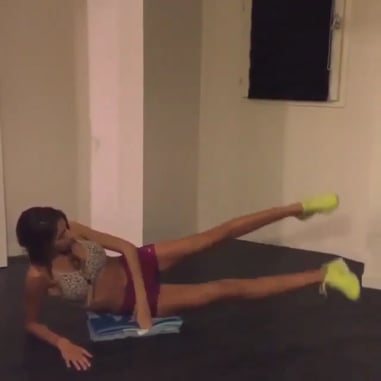
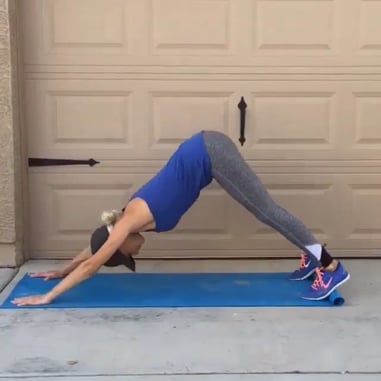
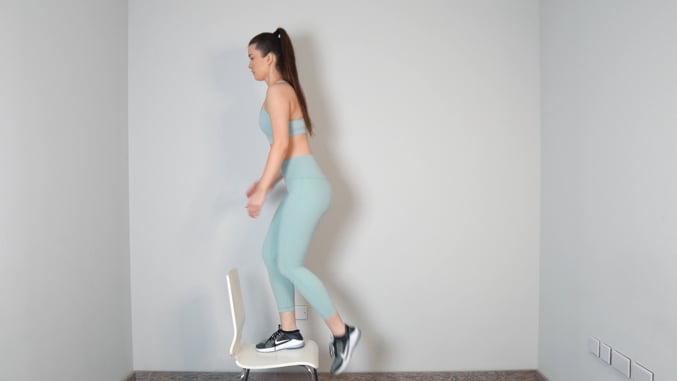
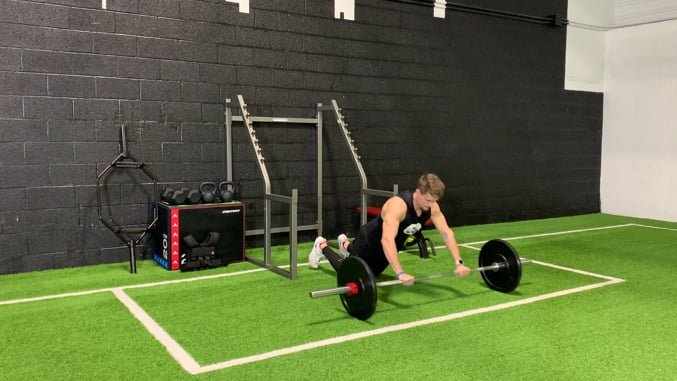
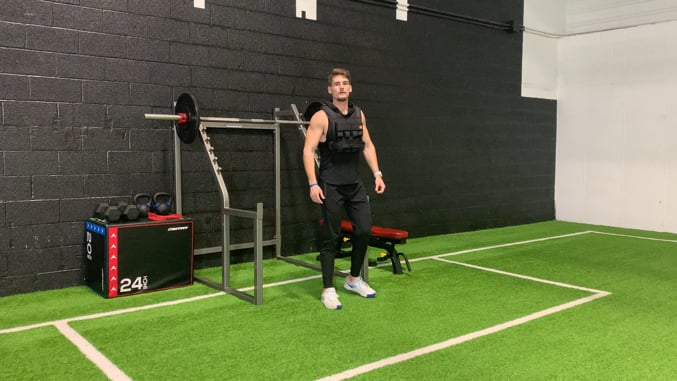


Blog
The pectoralis major muscle is one of the most difficult muscles to train, but it can be trained. In this article, we will look at the pectoralis major muscle and how to train it.
The development of the chest muscle is an indicator of how hard you are working on your body. This muscle group is one of the largest and most complex muscles in the human body. A good workout requires a combination of basic and isolation exercises. This is the only way to make your muscles perfect.
Exercises with barbells are good for building muscle mass, while exercises with dumbbells and equipment are good for improving form and detail. It is not advisable to use very heavyweights in the beginning. It is much better to get a feel for the muscles needed when working the chest, arms, and shoulders. For example, classic push-ups from the floor will help you feel the pectoral muscles and understand how they work. For proper training, you should use different chest dumbbell exercises to work the muscles from different angles.
Dumbbell Bench Press
Place dumbbells next to your arms. Start by getting into the correct posture. Press the back of your neck, back, and pelvis against the bench. Press your heels to the floor and open your legs 60 degrees. Once you have learned this posture, sit down and take a dumbbell and place it on your lap. Lie down and pull the dumbbells up to your chest. Keep the dumbbells parallel, extending the arms at a slight angle to your elbows. Lower the weights gently and begin the chest exercise by moving your elbows up and down. When you feel your pectoral muscles stretch, return your arms to the position you started from.
Hammer
Start in the correct posture. Sit on the edge of the bench and place the dumbbells on knees. Lie down so that the back of your head, back, and buttocks are pressed firmly against the bench. At the same time, shift weight from your hips to your chest. Lift arms in front of you, maintaining a 90-degree angle. Place your palms so they face each other and bend your elbows slightly. Inhale when bending your arms and pulling the dumbbells toward your chest. As you exhale, relax the hips and focus on tensing your pectoral muscles. Repeat. It is important to concentrate on your pectoral muscles because the 'hammer' puts extra tension on your triceps. This exercise is performed slowly and requires a lot of concentration. This exercise is ideal for beginners or players recovering from chest, shoulder, or elbow injuries.
Dumbbell Press
Lie on a bench so that your neck, shoulders, and hips are in close contact with the surface of the chair. Make the feet close to the floor, holding a dumbbell in each hand at chest level, one hand on the other. Secure the dumbbells behind your head, concentrating on stretching your pectoral muscles. This only works the shoulders. Apply maximum tension on the lower amplitude and return the arms in the same trajectory. Since this dumbbell chest exercise is a supplemental exercise, it makes sense to mix it up with the basic exercises. It also stretches the pectoral muscles and helps to shape the chest. Make sure your head is supported in this position.If not, you may injure your neck muscles or cause nerve compression. Work with dumbbells smoothly and avoid sudden jerks or extreme weights.
Also, remember that while warming up before a workout can help build endurance and recovery, it should not be relied upon exclusively. Proper sleep and nutrition are the most important factors in achieving gym results.
Chest exercises can help improve your sense of security and overall health, so be sure to at least train these muscles.
Read more
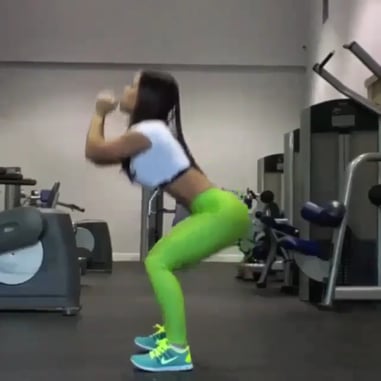
Many people want to have beautiful thighs. Unfortunately, to keep them in good shape requires long and hard work. Here are some exercises that are sure to help you work out your thighs.
Cross Lunges
This deep stretch will improve your thighs and give you energy. Spread your legs and point your feet outward. Bending your knees, lower yourself into a squat position. Put the palms on your hips above your knees to deepen the squat and stretch further. Jump up and put your feet in front of each other, straightening and crossing your legs as you land. Get back to the position from the start and repeat the actions with the opposite leg. Repeat this exercise as many times as possible, alternating between the two legs, for at least 40 seconds.
Knee Squats
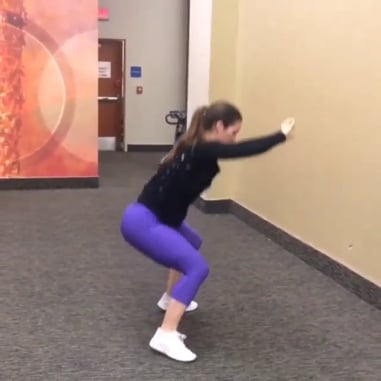
Knee squats together are better to strengthen the inner thighs, quads, and hamstrings than regular squats. And to avoid wasting time, you can work your arms at the same time. Stand up straight with your feet together. Pick up some dumbbells, bend your arms at the elbows, and bring them into contact with your shoulders. Perform squats with your knees bent and your hips pulled back as if you were going to sit on a chair. Keep your feet together throughout the exercise holding the weight on your heels. Now extend your arms upward. Return to the start without transferring the weight to your toes. Do 10 repetitions.
Elbow Plank Leg Lift
Add leg lifts to the regular elbow plank to improve hip work. Lie on your side, and bend your right arm at the elbow leaning on it. Stretch your leg so that your body is in a straight line. Try to lean only on the outer edge of your right leg. Place your left hand on your hip. Feel your spine stretching and the tension in your abs, then raise your left leg slightly to your hip. Slowly put it back down. Without bending at the waist or leaning on your shoulders, place the weight on your elbows. Do about 15 reps on both sides.
Leg bend swing
This is one of the most popular exercises for strengthening the hips and thighs. It is suitable for everyone, requires no additional equipment, and does not involve the spine. This combination works the posterior, anterior, lateral, and medial thighs. Start doing the plank with your palms under your shoulders and your knees under your pelvis, keeping your back in position. As you exhale, push up on your heels; do 20 reps on each leg for four sets.
Side push-ups
If this is your first time doing this exercise, you don't need any dumbbells - learn the leg movements first. Holding a dumbbell in your right hand, run hard to the left and place your right hand onto your right leg. Lower your hips as far as you can and lean on your heels. Point your toes forward and bend your leg at a 90-degree angle. Push off with your left foot and get into a courtesy position: left foot back, right foot forward. Raise your arms with weights upward, pointing your feet up. Keep your hips and legs tense. Do not return to the start for the repetitions, but go straight from squat to side position. Perform three sets of 10 reps each, then switch sides.
Final Words
If you know that beautiful thighs are a reality and you have these exercises, then why not try and make your body better?
Read more

The Kardashians have created many beauty trends, one of which is having beautiful buttocks. So, in this article, we'll talk about building great gluteus muscles so you can look as attractive as Kim, Kourtney, and Khloe. Let's begin by looking at the anatomy. The glutes are made up of three main parts.
The gluteal maximum muscles, which are the largest muscles in the body, help to maintain balance when walking and running. They allow your legs to move sideways and are also responsible for contouring the shape of the buttocks.
The gluteus medius is overlaid in part by the gluteus maximus and is located at the top of the pelvis. It is involved in leg extension, lateral flexion, and body stabilization during the movement.
Finally, below is the gluteus minimus. Both are in charge of leg induction and body stabilization, as well as shaping the thigh line.
Training for the glutes
Building your glute muscles isn't easy, particularly when you're on a tight schedule. However, by working out at least three times a week and never giving up, you will quickly reach your goal. To help you achieve your goals, we've compiled the best exercises for your gluteus muscle development.
Deep squat with a barbell
This is one of the basic exercises that help to develop this muscle effectively. From the starting position - with your feet apart - lower your pelvis below the knees. Keep your lower back straight and make sure the knees do not go over your feet. Spreading your legs wider apart puts more pressure on your hips.
Romanian deadlifts
Stand up straight with a slight bend at the waist. Holding the dumbbells in both hands, bend over and pull your pelvis backward. Reaching a point just below your knees, return to start.
Dumbbell split squat
Exercise with a straight back and one leg stepping forward while the other leg is thrown into a brace behind you. Squat down and perform the exercise with both legs.
Back lunges
From the standing position, take a large step backward and drop down to form a bent-over position. Return to start and repeat this exercise for the other leg. Make sure your knee is bent at a right angle and not sticking out past your toes, do 20-30 reps. It is important to step backward precisely, maintaining rhythm and balance.
Having great gluteus is everyone's dream, and luckily, developing these muscles isn't difficult if you know the right exercises. So why not take advantage of our tips and start working towards your goal right now?
Read more
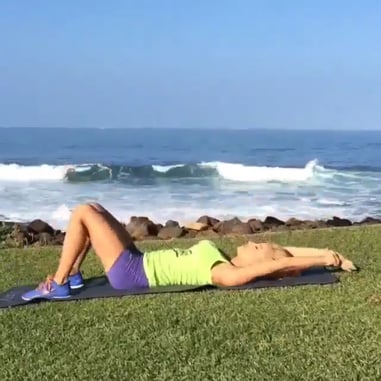
After the abdominal muscles are prepared, the obliques are the next step. The obliques are several groups of abdominal muscles on either side of the main body. The external obliques are at the top and the internal obliques are at the bottom. Training them with functional exercises includes flexion, twisting, and other rotational movements. In order to properly exercise the lateral muscles, however, it is important to remember that most oblique exercises also involve the other abdominal muscles, especially the medial transverse muscles. Therefore, you need to engage certain areas of the abdominal abs in a conscious manner.
Lateral twists
The basic exercise for the abdominal obliques is the lying lateral twist. Begin with lying on your side with your arm bent at the elbow to support your head. Extend the elbow toward the leg slowly, performing a purposeful contraction of the abdominal obliques.
Prone lateral push-ups
This exercise is fine for developing the neuromuscular links between the abs and the brain. Lying on the back, pull your left elbow in a slow tempo towards the opposite knee. Perform 12-15 reps on each side, and try to achieve a special burning feeling.
Lateral push-ups on a fitness ball
The advantage of this exercise is that you achieve a wide range of motion by bending your body slowly and controlling each movement over the ball. As you lift, feel your side abdominals twist and stretch as you descend. Place your arms behind your neck and do not move them apart.
Cross contacts
Make sure that your legs are straightened up while you are lying on your back. Place your hands on the back of your head and lift your head and shoulder blades slightly. Then do a twisting motion, extending your legs with the opposite arm straight. Perform the same movement for the other side. Repeat at least 20 times.
Lift your hips
Make sure you are lying straight on one side. Your feet should be lying on top of each other and your free arm fixed at the waist. You need to lift your torso so that your body line is completely straight at peak amplitude. At the apex, pause briefly to emphasize the work of the obliques. As you lower your torso, your thighs are only gently touching the ground and the muscles are not fully relaxed.
Developed obliques provide the framework for your abs and make them look amazing, so if you really want to have a great abdomen, you should work both your abs and obliques.
Read more
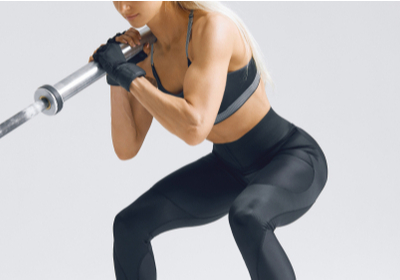
The quadriceps is a large and strong muscle that acts as the primary extensor of the knee joint. Because the knee joint carries most of the body's weight, the quadriceps is the main muscle of the lower thigh. Weakness of this muscle, in fact, would simply make it impossible for people to maintain an upright posture. Quads are made up of the four coronary muscles: the straight, inner, outer, and middle muscles. In spite of this, during various exercises, the load falls completely on this muscle. Sure, strengthening your quads is important, so let's give a quick look at a few of the best exercises for them.
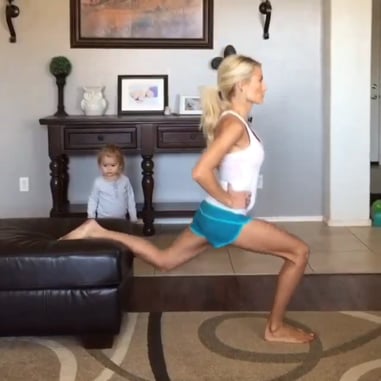
Barbell and Dumbbell Lunging
You can do lunges in many different ways. You can do this either with a barbell, or dumbbells, while walking around the gym, or from a stand-up position. Let's consider a variation where the athlete stands in a position using a barbell or dumbbell. This position is similar to the squat position with a barbell on your back. Take a step forward with your right foot. The lunge should make the thigh of the working leg to be parallel to the ground at the low point. Simultaneously, the knee of the left leg almost touches the floor, also forming a 90-degree angle. Back to the previous position. Change legs - take a step forward with your left leg.
Leg Press
The leg press takes as much of the work out of your back and hips as possible. At the same time, it allows you to train with a much heavier weight than a deep squat. In order to place the load on your quads, your feet should be shoulder-width apart while doing the leg press.
Just follow the right workout technique. Press your back and head firmly against the bench, with your legs almost completely straight and resting on the frame and your hands firmly gripping the handles. Bending the knees, form a straight angle between the thighs and calves. Lower the legs back to the previous position.
Single-Leg Squat
Make single-leg squats if you can't go to the gym to train with training machines. It is a perfect way to get your quads workout done. Because it allows you to load your legs without using extra weight. Start in a standing position, extending one leg slightly forward. While squatting down, extend the leg forward and straighten it. Get back to the previous position. Repeat at least 10 times for each leg.
Kick Squat
Standing with feet shoulder-width apart and toes slightly to the side, place your hands at your waist or cradle them in front of your chest. Focus on the center of your feet. Squat down horizontally at the hips, remembering to keep your back straight. Stand up shifting your weight to one side. Lift your knee to a horizontal position and make a kick with your foot. The kick should be done in one movement.
Squats With Fitness Ball
Position your feet a little wider than shoulder-width apart with your toes out to the sides at a 45-degree angle. Grasp the fitness ball, keeping a tense and natural bend at the waist, straight shoulders, and neck. Holding the exercise ball, raise your arms up to shoulder height. As you inhale, begin to bend your knees to your sides, making sure they don't stick out past your toes. Your hips should go down first. Your weight is on your heels. Bring your back slightly forward as you squat down and extend your arms to lift the exercise ball over your head. Perform 30-50 repetitions.
Final Thoughts
Every person dreams of having beautiful legs, and luckily, getting great quads isn't that hard if you know what to do. So why don't you try these exercises?
Read more